
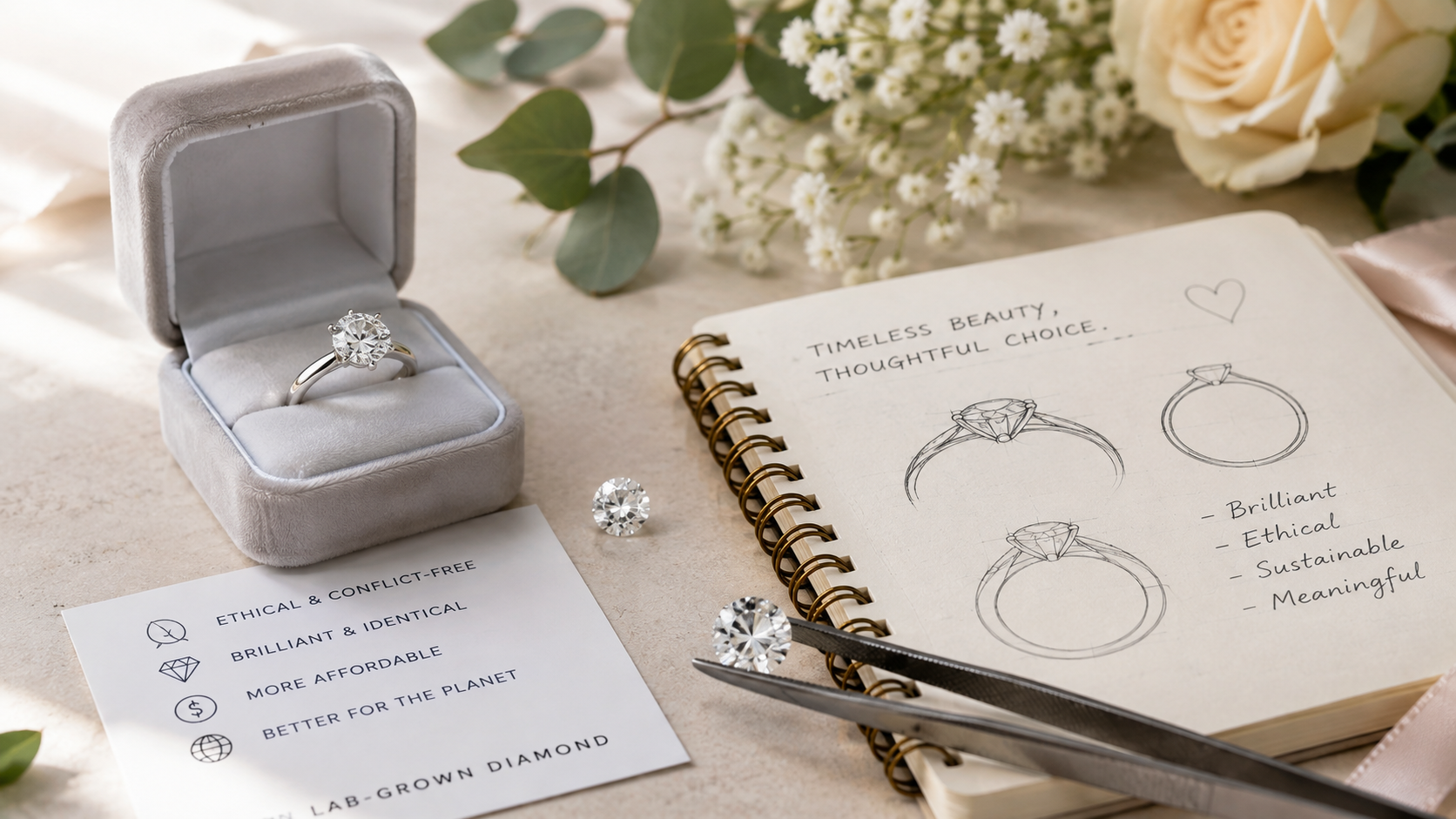
Choosing an engagement ring has traditionally involved a search for a natural diamond with the right combination of size, cut, clarity, and color. While those qualities remain important, modern couples now have more options than ever before. One of the most significant changes in the diamond market has been the growing interest in lab-grown diamonds. Created using advanced technology that replicates the conditions under which diamonds form naturally, these stones offer the same fundamental crystal structure as mined diamonds while giving consumers another way to approach one of the most meaningful purchases they will make.
Understanding Lab-Grown Diamonds
Lab-grown diamonds are genuine diamonds produced in controlled laboratory environments rather than extracted from the earth. Two primary technologies, Chemical Vapor Deposition (CVD) and High Pressure High Temperature (HPHT), are used to create them.
The resulting stones are composed of carbon arranged in the characteristic crystal structure of diamond. They can therefore possess the same physical, chemical, and optical properties associated with natural diamonds. Professional grading laboratories can evaluate their characteristics, including cut, clarity, color, and carat weight.
For shoppers considering a lab grown diamond, understanding this distinction is useful. The term does not describe an imitation such as cubic zirconia or glass. Instead, it refers to a diamond that has been created through a technological process rather than geological formation over millions of years.
Why Couples Are Considering Lab-Grown Options
Greater Choice Within a Budget
One of the main reasons lab-grown diamonds have attracted attention is their pricing compared with comparable mined diamonds. Because they are produced in controlled environments and do not require traditional mining, they can provide consumers with additional flexibility when setting a jewelry budget.
That flexibility can allow couples to consider a larger stone, a particular cut, or a higher clarity grade without necessarily increasing their overall spending to the same extent. Of course, prices vary according to the characteristics of each individual stone, so comparing specifications remains important.
Similar Visual Appeal
For most consumers, the appearance of the finished stone is central to the decision. A well-cut lab-grown diamond can display the brilliance and fire expected from a diamond, making it suitable for a wide range of jewelry designs.
The cut remains particularly important. Even a high-quality diamond may not look its best if it is poorly proportioned or finished. Buyers should therefore pay attention to the grading information and examine the stone’s cut quality rather than focusing exclusively on carat weight.
The Changing Approach to Engagement Rings
The rise of lab-grown diamonds is also influencing how couples think about engagement-ring design. Rather than viewing the diamond simply as a traditional symbol, many buyers are looking for a ring that reflects their personal style, priorities, and relationship.
A classic solitaire remains a popular option, but modern designs may feature halos, three-stone arrangements, elongated cuts, or minimalist settings. The choice of metal also contributes significantly to the final appearance, with white gold, yellow gold, rose gold, and platinum offering different visual characteristics.
When exploring 鑽石戒指, shoppers can therefore consider the complete design rather than selecting the stone in isolation. The interaction between the diamond’s shape, setting, metal, and proportions can determine how balanced and distinctive the finished ring appears.
Sustainability and Consumer Awareness
Environmental considerations have become increasingly relevant to purchasing decisions across many industries, including jewelry. Some consumers are attracted to lab-grown diamonds because the production process provides an alternative to traditional diamond mining.
However, sustainability is a nuanced subject. The environmental impact of a lab-grown diamond can depend on factors such as the technology used and the energy source powering the production process. Consumers who place significant importance on sustainability should therefore look beyond broad marketing statements and consider available information about production practices.
This growing awareness is part of a wider trend in which shoppers want to understand where products come from and how they are made. Transparency can be just as important as price when making a significant purchase.
What Buyers Should Consider
Although lab-grown diamonds offer several potential advantages, buyers should still approach the purchase carefully. A diamond’s cut, color, clarity, and carat weight all influence its appearance and value. Certification can also provide useful independent information about a stone’s characteristics.
It is equally important to compare the complete ring package. The setting, craftsmanship, metal quality, warranty, resizing options, and after-sales service can all affect the long-term experience of owning the jewelry.
A More Flexible Future for Engagement Jewelry
The growing popularity of lab-grown diamonds reflects a broader change in consumer expectations. Today’s couples have access to more information, more design choices, and more ways to personalize traditional symbols of commitment.
Lab-grown diamonds are unlikely to replace every preference for natural stones, and both options continue to appeal to different buyers. What they have done is expand the range of choices available to couples.
For those seeking a combination of modern technology, design flexibility, and potentially greater value within their budget, lab-grown diamonds represent an increasingly relevant option. As jewelry preferences continue to evolve, their role in contemporary engagement rings is likely to remain an important part of the changing diamond market.