
Watching the Northern Lights is one of those experiences that stays with you forever. Curtains of green, purple, and pink dancing across the night sky can turn an ordinary evening into something unforgettable. But anyone who has chased the aurora knows that timing is everything.
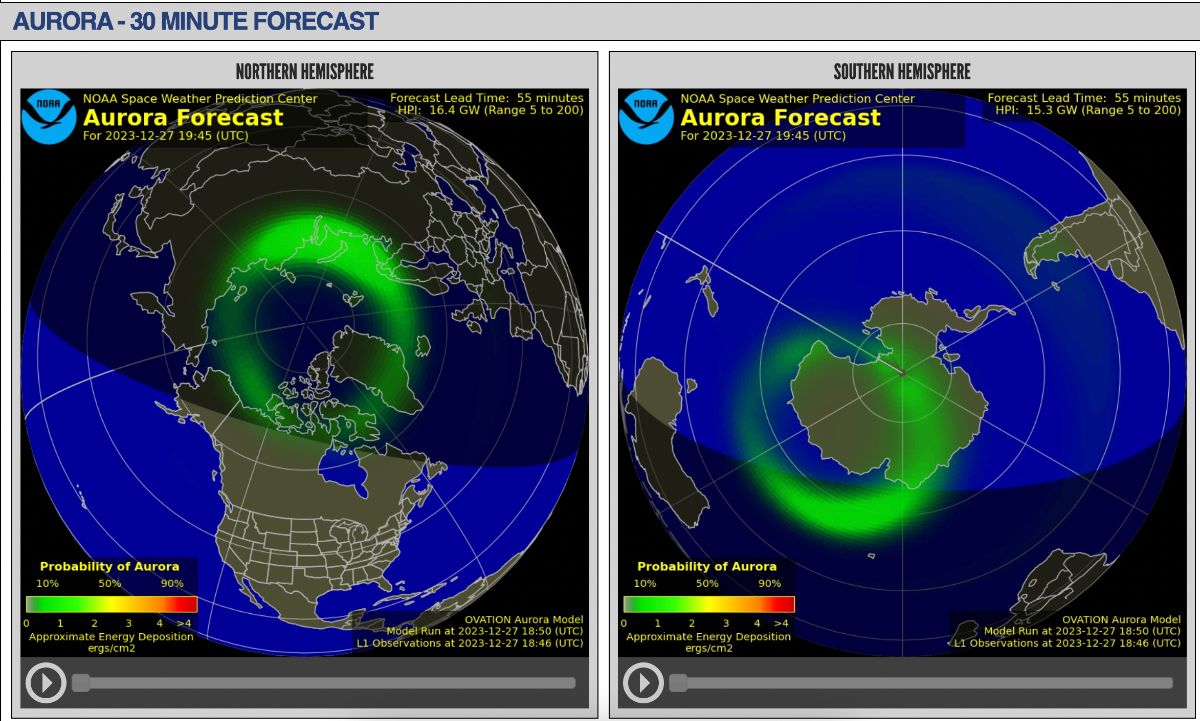
That’s where a northern lights 30 minute forecast becomes incredibly valuable. Instead of relying only on daily predictions, a short-term forecast helps you understand what may happen in the next half hour, allowing you to react quickly when auroral activity increases.
Whether you’re traveling to Iceland, Norway, Finland, Alaska, Canada, or another aurora hotspot, understanding these real-time updates can dramatically improve your chances of seeing nature’s greatest light show.
What Is a Northern Lights 30 Minute Forecast?
A 30-minute aurora forecast is a short-term prediction that estimates where and how strongly the Northern Lights may appear during the next half hour.
Unlike long-range forecasts that predict activity days ahead, these updates focus on near real-time space weather observations. They combine data from satellites monitoring the Sun with measurements of the solar wind as it approaches Earth.
Because the solar wind takes roughly 30 to 60 minutes to travel from monitoring satellites to Earth, forecasters can make surprisingly accurate short-term predictions.
Why Short-Term Aurora Forecasts Matter
Many visitors check the weather once during the afternoon and assume that’s enough. Unfortunately, the aurora doesn’t work that way.
Solar activity changes constantly. A weak display can suddenly become spectacular within minutes, while an impressive forecast may fade unexpectedly.
A short-term prediction helps you:
- Decide whether it’s worth heading outside now
- Choose the best viewing location
- Avoid spending hours waiting unnecessarily
- React quickly to increasing geomagnetic activity
- Maximize limited vacation time
If you’re only spending a few nights in an aurora destination, every hour counts.
How the Forecast Is Created
Scientists monitor several important factors before producing near real-time aurora predictions.
Solar Wind Speed
Faster solar wind generally increases the chance of stronger auroral displays.
Magnetic Field Orientation
The direction of Earth’s magnetic interaction with incoming solar particles greatly affects visibility.
Geomagnetic Activity
Higher geomagnetic activity usually means brighter auroras that can be seen farther south.
Cloud Cover
Even the strongest aurora can’t be seen through thick clouds, making local weather forecasts just as important as space weather.
Understanding Aurora Forecast Levels
Many forecast services use a simple activity scale.
| Forecast Level | Expected Visibility | Best For |
|---|---|---|
| Low | Faint activity near polar regions | Experienced photographers |
| Moderate | Visible with occasional bright displays | Most travelers |
| High | Bright dancing auroras across wider areas | Excellent viewing conditions |
| Severe | Strong geomagnetic storm with vivid colors | Rare, unforgettable events |
Remember that this table only provides general expectations. Local weather, darkness, and light pollution remain equally important.
Best Places to Use a 30-Minute Aurora Forecast
Real-time forecasts become especially useful in popular Northern Lights destinations.
Some of the best viewing regions include:
- Iceland
- Northern Norway
- Finnish Lapland
- Swedish Lapland
- Yukon
- Northwest Territories
- Alaska
- Northern Scotland during strong storms
These locations already have excellent viewing potential, but short-term forecasting helps determine when conditions become favorable.
Real-Time Forecast vs Daily Forecast
Many travelers wonder whether they should rely on hourly or daily predictions.
Here’s a simple comparison.
| Feature | 30-Minute Forecast | Daily Forecast |
|---|---|---|
| Time Range | Next 30 minutes | 24 hours or longer |
| Accuracy | Higher for immediate viewing | Better for trip planning |
| Updates | Frequent | Less frequent |
| Best Use | Leaving for a viewing spot | Planning travel days |
| Reliability | Strong for current conditions | Less precise for exact timing |
Using both together provides the best overall strategy.
Tips for Using the Forecast Effectively
Checking the forecast alone isn’t enough.
To improve your viewing chances:
Watch Cloud Coverage
Even excellent aurora activity won’t help if the sky is overcast.
Escape City Lights
Artificial lighting makes faint auroras much harder to see.
Be Patient
Auroras often appear in waves. Quiet skies can suddenly become active.
Dress Warmly
Winter temperatures in aurora regions can become extremely cold after sunset.
Refresh the Forecast Frequently
Conditions may change every few minutes, especially during periods of increased solar activity.
A Real-World Example of Successful Aurora Planning
Imagine you’re visiting Tromsø, Norway, for three nights. The daily forecast predicts moderate aurora activity throughout your stay, but the evening begins with little visible movement.
Instead of returning to your hotel, you monitor a 30-minute forecast, which shows a rapid increase in incoming solar wind. You decide to wait another 40 minutes outside the city.
Soon afterward, vibrant green ribbons spread across the sky, creating the unforgettable display you had hoped for. Without following short-term updates, you might have missed the best part of the night.
My Experience Following Short-Term Aurora Updates
During one winter evening, I learned that checking a short-term aurora forecast every few minutes was far more useful than relying only on the morning prediction, especially when the sky suddenly became active after a long quiet period.
Common Mistakes People Make
Many first-time visitors unknowingly reduce their chances by making avoidable mistakes.
These include:
- Looking only at the KP index
- Ignoring cloud forecasts
- Staying inside until activity becomes obvious
- Expecting constant movement
- Leaving too early after a quiet start
- Visiting brightly lit urban areas
Understanding these factors can make the difference between disappointment and an incredible night under the stars.
Can You Trust a 30-Minute Forecast?
Generally, yes—but with realistic expectations.
Auroras depend on highly dynamic solar activity, so no prediction is perfect. However, short-term forecasts are often among the most useful tools available because they’re based on current space weather observations rather than long-range estimates.
Treat them as a guide instead of a guarantee.
The most successful aurora chasers combine:
- Near real-time forecasts
- Local weather reports
- Dark-sky locations
- Patience
- Flexibility
Together, these factors significantly improve the odds of witnessing an amazing display.
Also Read: Best Month to See Northern Lights in Iceland Guide
Conclusion
A northern lights 30 minute forecast offers one of the smartest ways to improve your chances of seeing the aurora. By combining real-time space weather data with local conditions, these forecasts help you make informed decisions about when and where to head outside.
While no prediction can promise a perfect display, staying updated, monitoring the weather, and remaining patient can greatly increase your likelihood of experiencing one of Earth’s most breathtaking natural wonders. Whether you’re planning your first aurora adventure or returning for another unforgettable night beneath the Arctic sky, short-term forecasting can become one of your most valuable travel tools.
FAQs
What is a northern lights 30 minute forecast?
It is a near real-time prediction showing the likelihood and intensity of aurora activity over the next 30 minutes using current space weather data.
Is a 30-minute forecast more accurate than a daily forecast?
For immediate viewing decisions, yes. Daily forecasts are useful for planning, while short-term forecasts provide better guidance for current conditions.
Can I see the Northern Lights if the forecast is low?
Yes. Weak forecasts can still produce visible auroras in northern locations with dark, clear skies.
Does the weather affect aurora visibility?
Absolutely. Cloud cover is one of the biggest factors. Even intense aurora activity cannot be seen through thick clouds.
How often should I check the forecast?
During an aurora hunt, checking every 15 to 30 minutes is a good practice because space weather conditions can change rapidly.
What time are the Northern Lights usually strongest?
Although they can appear anytime during darkness, activity often peaks between 10:00 PM and 2:00 AM local time, depending on location and solar conditions.