Running a business today means juggling more phone calls than ever before. Customers want quick answers, appointments need confirming, and leads need following up before they lose interest. For many small and mid sized businesses, hiring enough staff to handle every call is simply not realistic.
This is where an AI phone agent comes into the picture. It is a tool that can answer calls, understand what the caller needs, and respond naturally, all without a human sitting by the phone. In 2026, these tools have become far more capable and affordable, which means almost any business can now use them to save time and reduce missed opportunities.
This article walks through what these tools actually do, how they work, and which ones are worth paying attention to this year. The goal here is not to push you toward any single product, but to help you understand the landscape so you can make a decision that fits your own business.
Why Businesses Are Turning to Call Automation
Phone calls remain one of the most common ways customers reach out to a business, even in an age dominated by chat apps and social media. Yet answering every call promptly is hard. Staff get busy, calls come in after hours, and sometimes the volume simply outpaces what a small team can manage. When calls go unanswered, businesses lose customers to competitors who pick up the phone faster.
Call automation tools exist to close this gap. They are built to handle routine conversations, such as booking appointments, answering frequently asked questions, or collecting basic information from a caller before passing them to a human. The technology has moved well past the clunky robotic voice systems of the past. Today’s tools sound conversational, understand context, and can even pick up on tone to some extent.
The Shift From Scripted Bots to Conversational Systems
Older automated phone systems relied on rigid scripts. Callers had to press specific numbers or say exact phrases, and anything outside that narrow path led to frustration. The newer generation of tools works differently. They use large language models to understand natural speech, which means a caller can explain their situation in their own words and still get a useful response. This shift is a big reason why adoption has grown so quickly. Business owners no longer have to worry about customers hitting a dead end because they phrased something unexpectedly.
How an AI Phone Agent Actually Works
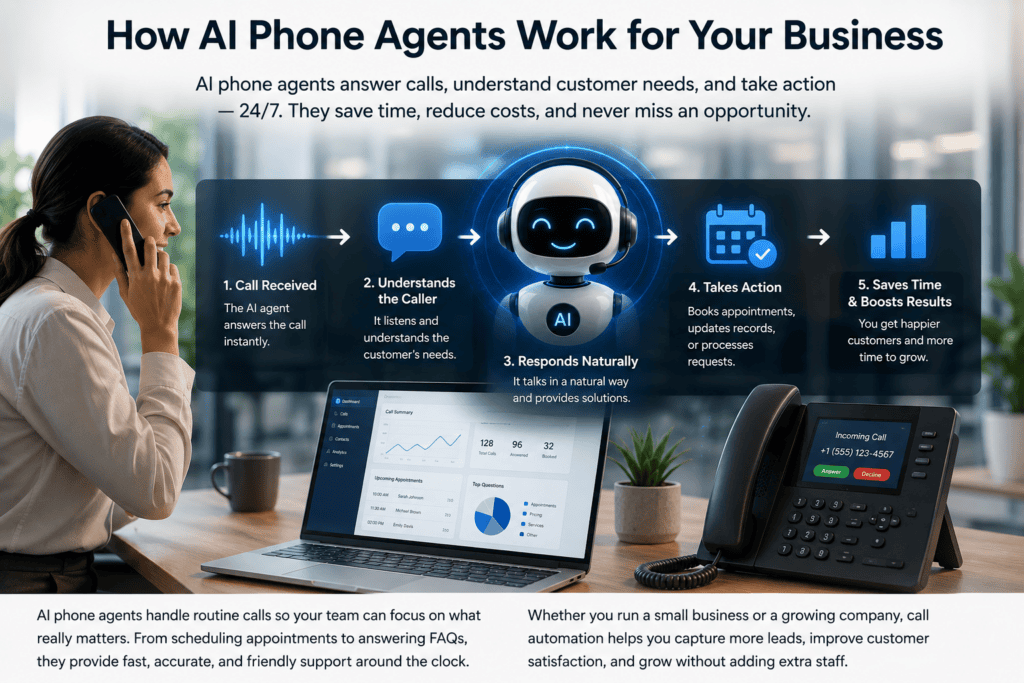
An AI phone agent typically combines speech recognition, natural language understanding, and text to speech technology into one smooth pipeline. When a call comes in, the system converts the caller’s speech into text, processes that text to figure out intent, and then generates a spoken response that sounds close to a real person. Some systems also connect to a business’s calendar, customer database, or order management system, so they can do more than just talk. They can actually book a slot, check inventory, or update a customer record while the call is happening.
What makes this useful is that the agent can operate around the clock. A customer calling at midnight to ask about store hours or to schedule a service appointment does not need to wait until morning. The system handles it instantly, and the business owner wakes up to a filled calendar slot instead of a missed call notification.
Where These Tools Fit Into a Business
Not every call needs a human touch, and that is really the core idea behind using an AI phone agent. Simple, repetitive interactions like confirming an appointment time or answering a question about pricing can be handled automatically. This frees up staff to spend their time on conversations that actually require judgment, empathy, or problem solving. A well set up system acts as a filter, letting routine calls flow through automation while flagging anything complicated for a real person to step in.
Popular Categories of Call Automation Tools in 2026
The market has grown enough that tools now tend to specialize rather than trying to do everything. Understanding these categories can help you figure out what your business actually needs.
Appointment Scheduling Assistants
These tools focus specifically on booking, rescheduling, and confirming appointments. They connect directly to calendar systems and can handle back and forth negotiation about timing, something that used to require a human receptionist. Clinics, salons, and service based businesses have been quick to adopt this category because missed or double booked appointments cost real money.
Customer Support and FAQ Handlers
This category is built to answer common questions without looping in a support team. Think of businesses that get the same handful of questions repeatedly, such as return policies, shipping times, or product availability. An AI phone agent trained on this kind of information can resolve these calls quickly, often faster than a human could look up the same details.
Sales and Lead Qualification Tools
Some tools are designed to handle inbound sales calls, asking qualifying questions and determining whether a lead is worth passing to a sales representative. This helps sales teams focus their energy on prospects who are genuinely likely to convert, rather than spending time on every single inquiry that comes through the phone line.
Outbound Follow Up Systems
Not all automation is about answering incoming calls. Some businesses use these tools to make outbound calls as well, such as reminding customers about upcoming appointments or checking in after a purchase. This kind of proactive outreach used to require dedicated staff time, but automation makes it possible to do at scale without adding headcount.
What to Consider Before Choosing a Tool
Picking the right system depends heavily on the size and nature of your business. A solo entrepreneur running a small service business has very different needs compared to a company handling hundreds of calls a day. Before committing to any platform, it helps to think through a few practical questions.
Integration With Existing Systems
A call automation tool is only as useful as its ability to connect with what you already use. If your business relies on a specific calendar app, customer relationship management system, or payment platform, check whether the tool integrates smoothly. Poor integration often leads to extra manual work, which defeats the purpose of automating in the first place.
Voice Quality and Natural Conversation Flow
Not all systems sound equally natural. Some still have a slightly mechanical cadence that customers can pick up on quickly, which may affect how they perceive your business. It is worth testing a demo call before signing up for anything long term, since the difference between a decent voice and a genuinely convincing one can shape customer experience significantly.
Data Privacy and Compliance
Phone calls often involve sensitive information, especially in industries like healthcare or finance. Any tool you consider should be transparent about how call data is stored, who has access to it, and whether it meets relevant privacy regulations in your region. This is not a detail to skip over, since mishandling customer data can create serious legal and reputational problems.
Cost Structure
Pricing models vary quite a bit across this space. Some tools charge per minute of call time, others charge a flat monthly fee with usage caps, and some price based on the number of active phone lines. Understanding your expected call volume ahead of time will help you avoid surprises on your monthly bill.
The Human Element Still Matters
It is worth remembering that automation works best as a complement to human staff, not a full replacement. Customers with complicated problems or emotional situations generally still prefer speaking with a real person. The businesses getting the most value out of these tools tend to be the ones that use automation for the routine, predictable parts of phone communication while keeping humans available for everything else. This balance keeps customer satisfaction high while still cutting down on wasted time and missed calls.
Conclusion
Call automation has moved from a novelty to a genuinely practical tool for businesses of nearly any size. As the underlying technology keeps improving, these systems will likely get even better at understanding nuance and handling more complex requests without human help.
For now, the smartest approach is to start small, test a tool on a limited part of your call volume, and expand once you see how it performs with your actual customers. Technology like this works best when it is introduced thoughtfully rather than all at once, giving both your team and your customers time to adjust to a new way of handling everyday conversations.