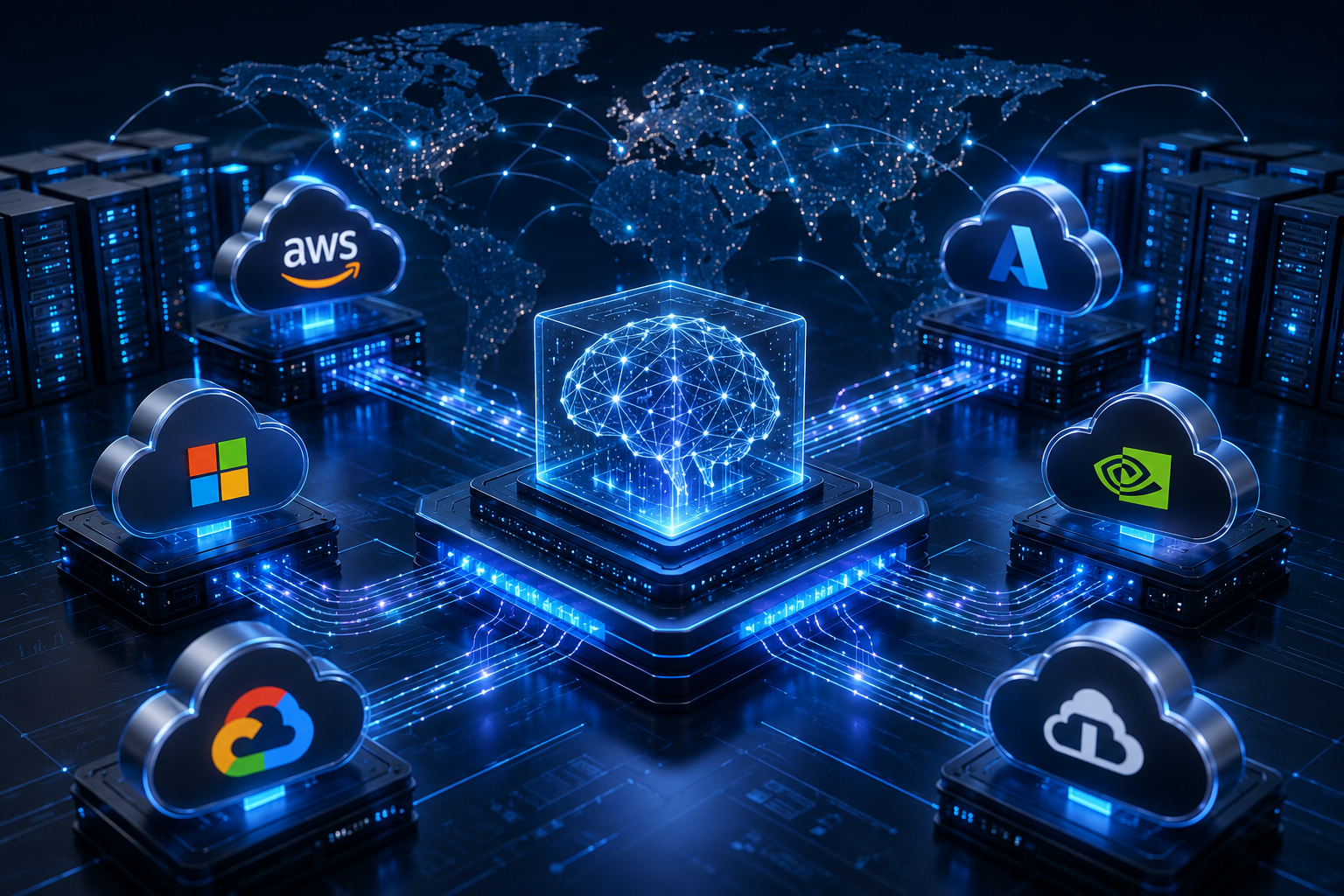
Building an AI app these days is easier than ever. There are plenty of great models available, but choosing the right infrastructure behind them is just as important.
A good inference platform helps your AI respond quickly, handle more users as you grow, and saves you from managing GPUs yourself. Some platforms focus on speed, while others are better for global deployments or custom AI projects.
In this guide, we’re looking at three of the best AI inference infrastructure providers in 2026: Telnyx, Groq, and Baseten.
Three Platforms Worth Considering
Each of these platforms takes a slightly different approach to AI inference. So, let’s just take a closer look at each platform and see where each of them stands out.
| Provider | Best For | Why We Like It |
| Telnyx | Overall value | Global infrastructure, simple API, great pricing |
| Groq | Speed | Some of the fastest AI inference available |
| Baseten | Custom deployments | Gives developers lots of flexibility |
- Telnyx
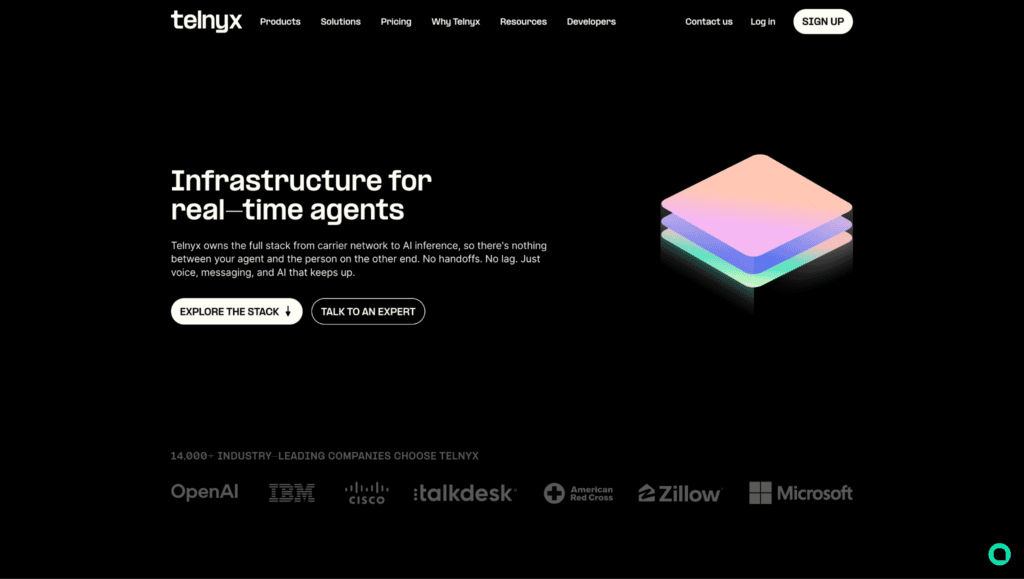
One thing that stands out is how simple it is to get started. If you’re already using the OpenAI API, switching over is easy because Telnyx supports OpenAI-compatible endpoints. In many cases, it’s just a matter of changing your API base URL instead of rebuilding your application.
Telnyx is probably best known for communications and voice services, but it’s also built a really solid AI inference platform.
Instead of trying to support every model available, Telnyx focuses on a smaller selection of popular open-weight models like GLM-5.2, Kimi K2.5/K2.6, MiniMax M3, and Qwen3. For most businesses, that’s actually a good thing because choosing a model becomes much less overwhelming.
Another big plus is its global infrastructure. Telnyx runs inference across multiple regions, helping reduce latency for users around the world while also supporting regional data requirements.
If you’re already using Telnyx for voice AI, messaging, or telephony, everything works together under the same platform, which makes managing your AI applications much simpler.
Pricing is also refreshingly straightforward, starting at $0.21 per one million tokens, with no GPU rental fees or hidden infrastructure charges.
What stands out
- OpenAI-compatible API
- Global inference across multiple regions
- Built-in autoscaling
- Function calling and fine-tuning
- Voice AI, speech, messaging, and inference on one platform
- Clear, transparent pricing
Pros & Cons
| Pros | Cons |
| Easy to switch from OpenAI | Mainly focused on open-weight models |
| Global infrastructure | |
| Fair, transparent pricing | |
| Great if you’re already using Telnyx services |
- Groq
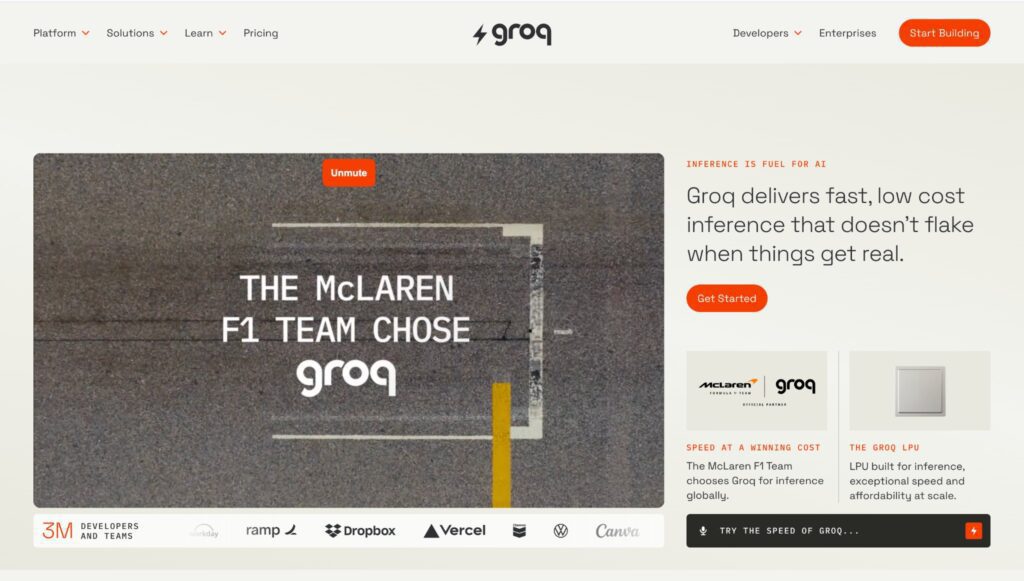
If speed is your number one priority, Groq is hard to ignore.
Unlike most providers that rely on GPUs, Groq has built its own hardware called the Language Processing Unit (LPU). It’s designed specifically for AI inference, and that’s where Groq really shines.
The biggest difference you’ll notice is how quickly responses are generated. That’s especially useful for applications like AI assistants, coding tools, and customer support, where even small delays can affect the experience.
Groq doesn’t try to offer every AI service under one roof. Instead, it focuses on doing one thing really well: delivering fast inference.
What stands out
- Extremely fast inference
- Custom-built LPU hardware
- Great for real-time AI
- Simple developer API
- Supports popular open-source models
Pros and Cons
| Pros | Cons |
| Very fast responses | Smaller feature set than some platforms |
| Great for real-time AI | Focuses mainly on inference |
| Easy to use |
- Baseten
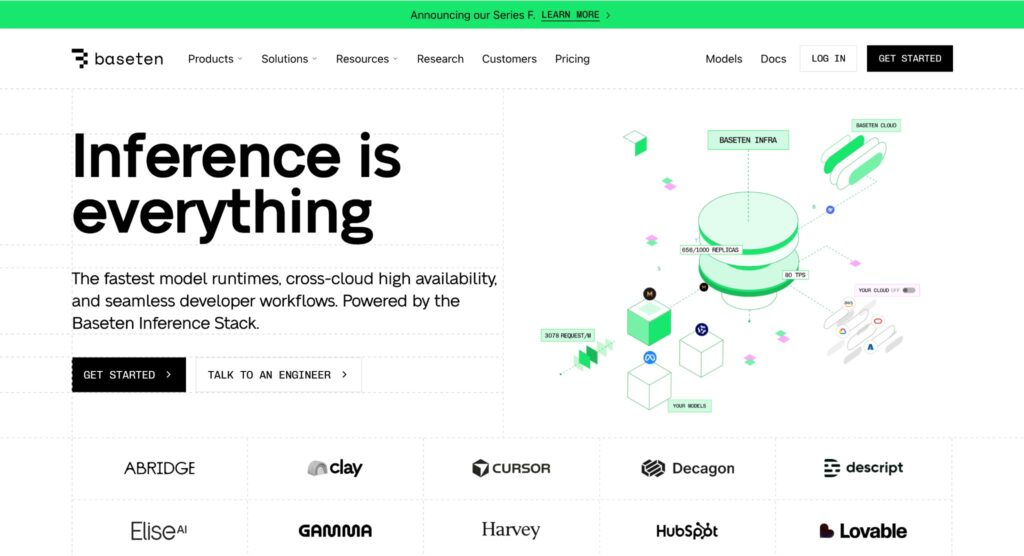
Baseten is a little different from the other two.
While Telnyx and Groq are great if you want to start using hosted models quickly, Baseten is aimed more at developers who want to deploy their own models.
One of its biggest strengths is Truss, an open-source framework that makes packaging and deploying models much easier. It also supports cloud, hybrid, and self-hosted deployments, giving teams more flexibility depending on how they want to run their AI workloads.
Baseten includes plenty of tools for production, like autoscaling, monitoring, model versioning, and high-availability deployments. It isn’t the simplest platform on this list, but if you’re building custom AI products, it offers a lot of control.
What stands out
- Custom model deployment
- Truss deployment framework
- Cloud, hybrid, and self-hosted options
- Autoscaling and monitoring
- Built for production AI
Pros & Cons
| Pros | Cons |
| Very flexible | Takes a bit more setup than hosted APIs |
| Strong deployment tools | Better suited to technical teams |
| Good monitoring and scaling features |
Which one should you choose?
All three platforms do a good job, but they each solve a different problem.
Groq is all about speed. If your application depends on the fastest possible responses, it’s one of the best options available.
Baseten is a great choice for teams deploying their own models and looking for maximum flexibility.
That said, Telnyx feels like the most well-rounded platform overall. It combines global inference, transparent pricing, OpenAI-compatible APIs, built-in scaling, and AI communication tools in one place. Instead of piecing together several different services, you can manage everything from a single platform.
If you’re building a production AI application and want something that’s easy to integrate today while still being able to scale later, Telnyx is the provider we’d recommend starting with.

Matt Henry
Matt is a results-driven SEO and outreach expert with a passion for helping businesses boost organic traffic, earn high-authority backlinks, and dominate search rankings. With over 5 years of experience in link building, technical SEO, and digital outreach, Faran stays on top of Google’s ever-evolving algorithms and SEO best practices. As a contributor to leading marketing blogs, Faran shares expert insights, proven outreach strategies, and actionable SEO tips to help brands grow sustainably. Whether it’s launching powerful link building campaigns or fine-tuning on-page SEO, Faran is committed to delivering long-term digital success. 📢 Follow Matt for cutting-edge SEO tactics and outreach strategies that actually work!
Facebook |