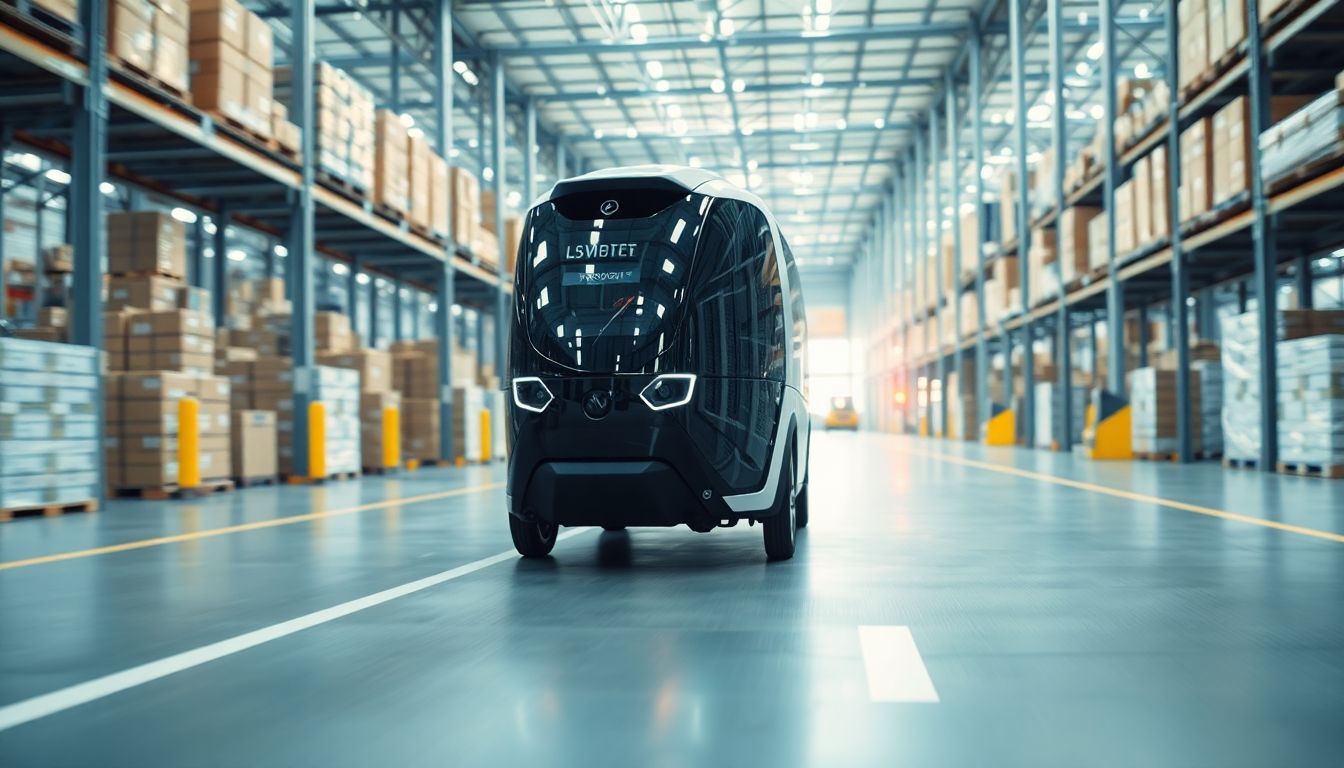
In the rapidly evolving world of logistics and warehousing, autonomous vehicles are emerging as a transformative force. These cutting-edge technologies promise to redefine how goods are transported and stored, offering unprecedented levels of efficiency and precision. As industries strive to meet the growing demands of global commerce, the integration of autonomous vehicles into supply chain management is becoming increasingly crucial. This article delves into the potential impacts of autonomous vehicles on logistics, examining the innovative technologies that are driving this transformation. From the integration of Automated Guided Vehicles (AGVs) and Autonomous Mobile Robots (AMRs) in warehouse operations to the role of advanced vision systems, we explore how these advancements are shaping the future of logistics and warehousing solutions.
Investigating the Future of Autonomous Vehicles in Supply Chain Management
The integration of autonomous vehicles into supply chain management represents a significant leap forward in logistics efficiency. These vehicles, equipped with sophisticated sensors and navigation systems, are capable of operating with minimal human intervention. This autonomy allows for continuous operation, reducing downtime and increasing throughput. As a result, companies can achieve faster delivery times and lower operational costs.
One of the key benefits of autonomous vehicles in supply chain management is their ability to optimize routing and scheduling. By leveraging real-time data and advanced algorithms, these vehicles can dynamically adjust their routes to avoid traffic congestion and other obstacles. This capability not only enhances delivery speed but also reduces fuel consumption and emissions, contributing to more sustainable logistics practices.
Moreover, autonomous vehicles can improve safety in logistics operations. By eliminating human error, which is a leading cause of accidents, these vehicles can significantly reduce the risk of collisions and other incidents. This safety enhancement is particularly important in high-traffic areas such as ports and distribution centers, where the potential for accidents is high.
Analyzing the Integration of AGV and AMR Solutions in Warehouse Operations
The deployment of AGV and AMR solutions in warehouse operations is revolutionizing how goods are handled and stored. These autonomous systems are designed to perform a wide range of tasks, from transporting pallets and containers to picking and sorting items. By automating these processes, warehouses can achieve higher levels of efficiency and accuracy.
AGVs and AMRs are equipped with advanced navigation systems that enable them to move seamlessly through complex warehouse environments. They can navigate around obstacles, avoid collisions, and find the most efficient paths to their destinations. This capability allows for more flexible and scalable warehouse operations, as these vehicles can be easily reprogrammed to accommodate changes in layout or workflow.
In addition to improving operational efficiency, AGVs and AMRs can also enhance inventory management. By providing real-time data on the location and status of goods, these systems enable more accurate tracking and forecasting. This information is invaluable for optimizing inventory levels and reducing the risk of stockouts or overstocking.
Exploring the Role of Vision Systems in Enhancing the Efficiency of These Technologies
Advanced vision systems play a crucial role in enhancing the efficiency and effectiveness of autonomous vehicles in logistics and warehousing. These systems use cameras and sensors to capture detailed images and data, which are then processed using sophisticated algorithms to interpret the environment.
Vision systems enable autonomous vehicles to recognize and respond to a wide range of objects and conditions. For example, they can identify different types of goods, read barcodes and QR codes, and detect obstacles or hazards. This capability is essential for ensuring safe and efficient operation in dynamic and unpredictable environments.
Furthermore, vision systems can enhance the precision of autonomous vehicles in tasks such as picking and sorting. By providing detailed visual information, these systems enable vehicles to accurately identify and manipulate items, reducing errors and improving productivity. This precision is particularly important in industries such as e-commerce and retail, where the demand for fast and accurate order fulfillment is high.
In conclusion, the integration of autonomous vehicles into logistics and warehousing is poised to revolutionize the industry. By leveraging advanced technologies such as AGVs, AMRs, and vision systems, companies can achieve unprecedented levels of efficiency, accuracy, and safety. As these technologies continue to evolve, they will undoubtedly play a pivotal role in shaping the future of logistics and warehousing solutions.