
For maintenance crews, utility fleets, and industrial service providers, compressed air is an essential utility. It powers impact wrenches for tire changes, operates nail guns for repairs, drives sanders for surface preparation, and cleans equipment. However, job sites and remote facility locations often lack stationary electrical power. A mobile, self-contained air compressor transforms a service truck into a self-sufficient mobile workshop. This article provides an objective technical evaluation of engine-driven, truck-mounted air compressors, offering professional guidance for fleet managers, equipment operators, and industrial procurement specialists.
Introduction and Operational Importance
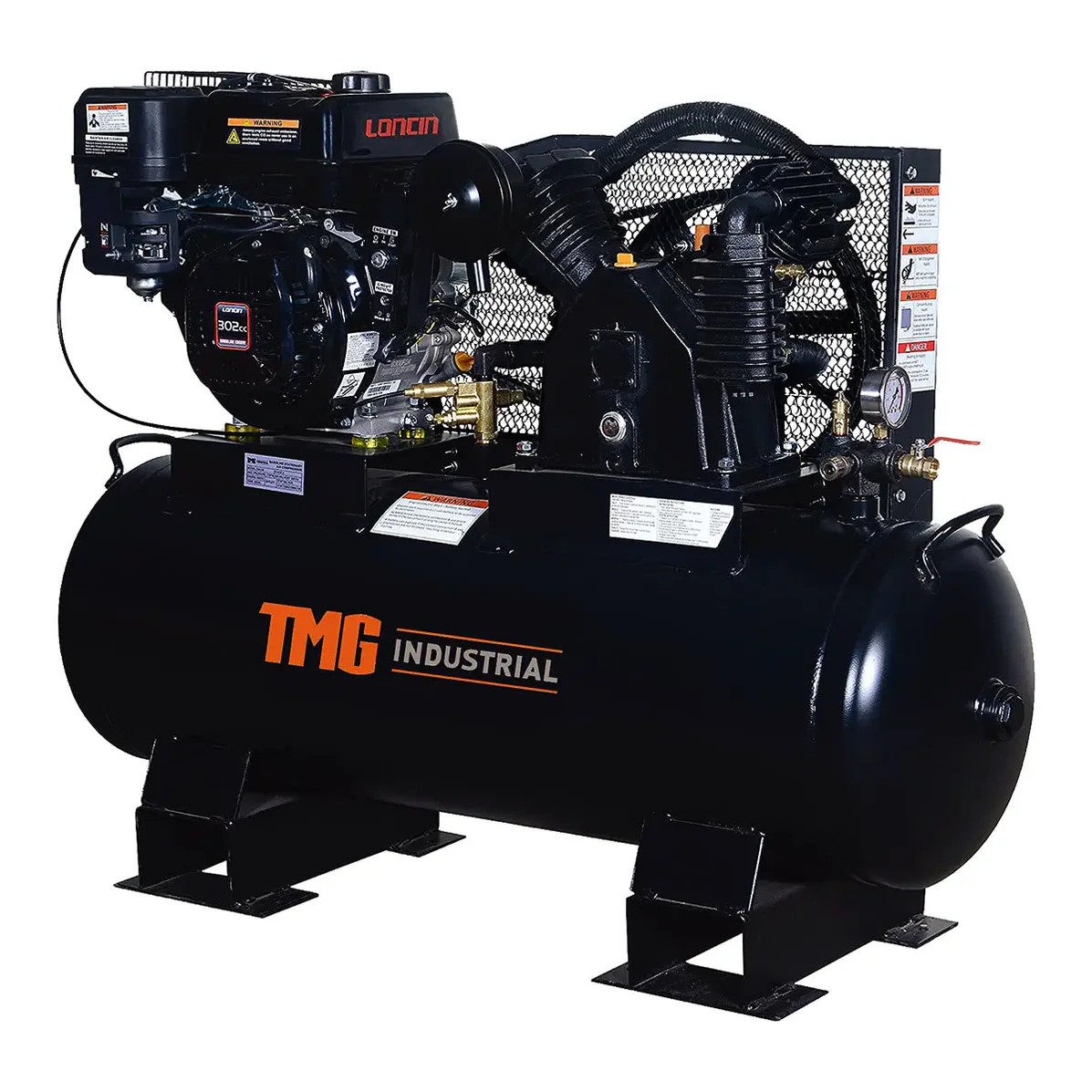
The core value proposition of a mobile air compressor is autonomy. It liberates maintenance operations from the constraints of shore power and extension cords. For logistics hubs with sprawling yards, a truck-mounted unit can travel directly to a disabled forklift or a flat-bed trailer, providing air power exactly where needed. For construction and oilfield support, it eliminates the need for a separate generator and electric compressor. A purpose-built unit like the 40 Gallon 2-Stage Truck Mounted Air Compressor is engineered to integrate with a work vehicle, combining storage tank, power source, and control systems into a single, rugged package.
Technology and Application Overview
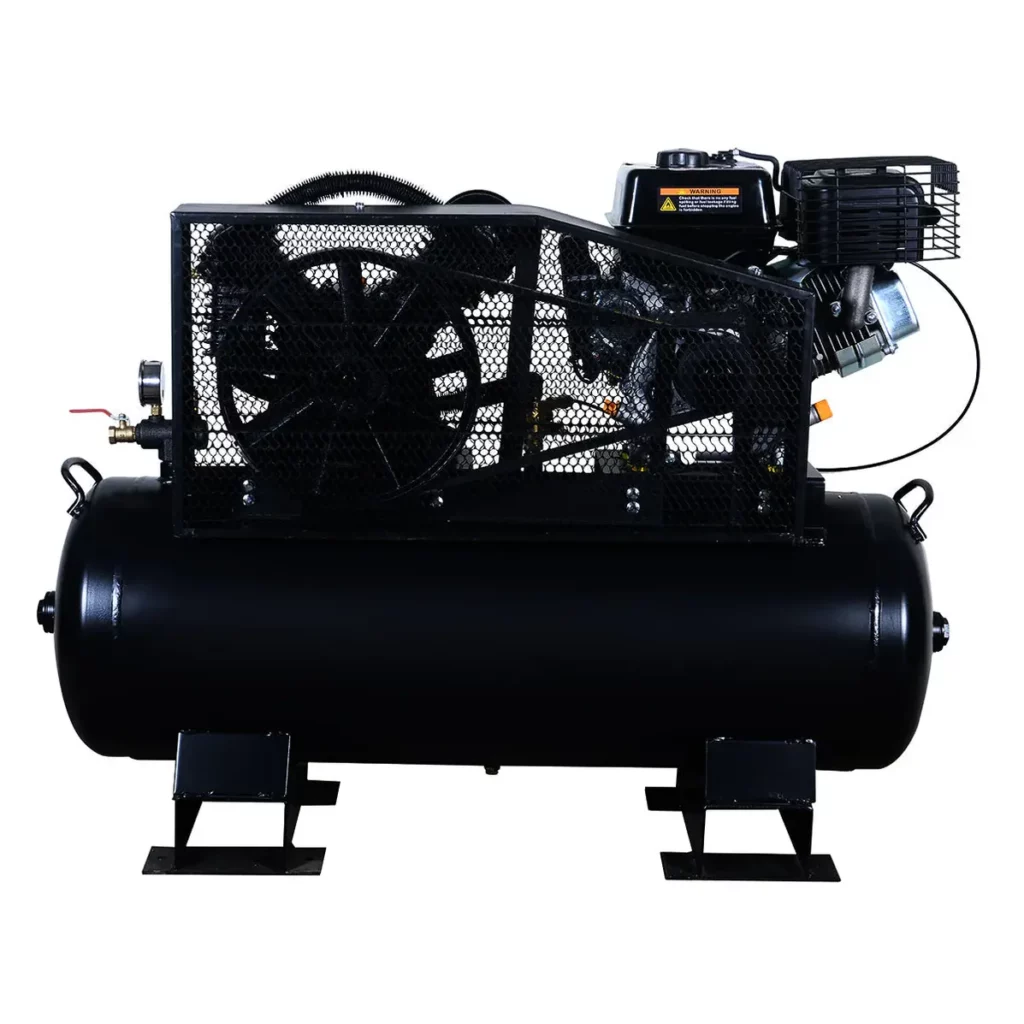
This equipment category consists of three integrated systems: a gasoline engine prime mover, a two-stage reciprocating pump, and a horizontal storage tank. The engine provides rotational power via a belt drive to the pump, which compresses air and stores it in the 40-gallon receiver. Key industrial applications include:
- Fleet Maintenance: Mobile tire repair and inflation for heavy trucks, forklifts, and earthmoving equipment.
- Facility Services: Operating pneumatic tools for roofing, siding, and general building repairs across large campus environments.
- Utility and Construction: Powering rock drills, cut-off saws, and air hammers at remote excavation or pipeline sites.
- Agricultural Support: Running grain aeration systems, cleaning equipment, and operating pneumatic conveying for feed.
Efficiency, Safety, and Productivity Impact
Efficiency is measured in workflow integration. A truck-mounted compressor eliminates travel time to and from a central shop compressor. It converts otherwise non-productive vehicle travel time into productive work time at the point of need. Safety is enhanced by reducing the handling of heavy portable generators and the tripping hazards of long air hoses. Productivity gains are realized through rapid response: a service truck arriving on site with a fully charged air system can begin work immediately, completing repairs faster and reducing equipment downtime.
Technical Foundations and Capacity Considerations
Power Plant and Pump Performance
The 40 Gallon 2-Stage Truck Mounted Air Compressor is powered by a 9-horsepower, 302 cc Loncin gasoline engine. This overhead valve, four-stroke power unit is EPA-compliant and features a regulated charging system and low-oil shutdown. It drives a cast-iron, two-stage compression pump via a heavy-duty belt. Two-stage compression is a critical technical feature; air is compressed in one cylinder, cooled, and then compressed further in a second cylinder. This design delivers higher pressure—up to 175 PSI—and greater efficiency than single-stage pumps, making it suitable for continuous-duty applications and multiple tools running simultaneously.
Air Delivery and Storage
Performance is quantified by air delivery at specific pressures. This model delivers 18.7 cubic feet per minute at 90 PSI, the standard reference point for most industrial pneumatic tools. It also provides 14.5 CFM at the maximum 175 PSI. The 40-gallon horizontal tank is powder-coated for corrosion resistance and includes a 3-amp battery charging circuit to maintain the vehicle’s starting battery. Forklift pockets integrated into the base frame allow for secure mounting and repositioning on a flatbed or service body.
Factors Affecting Performance and Operational Effectiveness
Several variables influence the success of a mobile compressor deployment:
- Duty Cycle and Tool Demand: The compressor is rated for an 80% duty cycle. Operators must understand the total CFM demand of their tools and allow for cool-down periods during continuous heavy use.
- Fuel Logistics: The engine consumes gasoline. For remote operations, carrying spare fuel is necessary; the unit does not draw from the vehicle’s primary fuel tank.
- Ambient Conditions: High altitude reduces engine power; cold weather may require seasonal fuel blends and oil viscosity adjustments.
- Mounting Stability: The unit must be securely fastened to the vehicle to prevent movement during transit. Vibration isolation may be required to prevent fatigue on the truck bed structure.
Safety Considerations and Best Practices
Operating a combustion-engine compressor on a vehicle introduces specific hazards that require strict protocols:
- Carbon Monoxide Hazard: Never operate the compressor inside a building or an enclosed trailer. Exhaust contains deadly carbon monoxide. Maintain the engine exhaust system in good condition.
- Fueling Safety: Shut off the engine and allow it to cool before refueling. Transport fuel only in approved safety containers.
- Pressure System Safety: Verify the pressure relief valve operates freely. Do not exceed the maximum rated working pressure of the tank or any downstream components.
- Electrical Safety: The electric start system and battery charging circuit are low voltage, but connections must be kept clean and insulated to prevent sparks near fuel vapors.
- Tank Maintenance: Drain condensate from the tank daily to prevent internal corrosion. Have the tank inspected periodically per ASME guidelines.
Related Equipment and Accessories
A complete mobile air system may include these components:
- Air Hose Reel: A spring-driven or motorized reel mounted on the truck for rapid deployment and storage of air hose.
- Pneumatic Tool Kit: A curated set of impact wrenches, ratchets, air hammers, and inflation accessories specific to the fleet’s vehicle types.
- Air Filtration and Lubrication: In-line filter-regulator-lubricator units to condition air for sensitive tools.
- Quick-Connect Couplers: Standardized fittings across all fleet vehicles and tools to ensure interoperability.
Advantages and Limitations
A clear understanding of capabilities and constraints informs appropriate specification:
- Advantages:
- Genuine mobility; air power is available at any location the service truck can reach.
- High output; two-stage pump and 40-gallon storage support demanding tools and extended use.
- Self-sufficient; no need for shore power or extension cords.
- Durable construction; cast iron pump and steel tank withstand job site conditions.
- Limitations:
- Engine maintenance; requires regular oil changes, air filter service, and spark plug replacement.
- Noise; gasoline engine is louder than an equivalent electric motor.
- Emissions; not suitable for indoor use or enclosed environments.
- Weight; approximately 400 pounds, consumes payload capacity and requires a robust mounting platform.
Real-World Application Example
A regional logistics fleet operating 120 heavy-duty trucks faced chronic delays in roadside tire repairs. Contracting external service providers often resulted in two-hour wait times. The fleet equipped four of its own service trucks with 40-gallon, two-stage truck-mounted compressors. Each service truck now carries a full set of impact tools, a hydraulic jack, and spare tires. When a truck reports a tire issue, the service truck responds directly. The compressor’s 18.7 CFM output runs a 1-inch impact wrench continuously, allowing a single technician to change a tandem-axle trailer tire in under 15 minutes. This in-house capability reduced average roadside repair time by 70% and eliminated outsourced service costs. The compressors’ forklift pockets also allow them to be offloaded at the maintenance shop for stationary use, demonstrating the value of this dual-mode flexibility.
Conclusion and Future Trends
The engine-driven, truck-mounted air compressor is a proven force multiplier for mobile maintenance and industrial field operations. Its value is highest in environments where work locations are diffuse and access to electrical power is unreliable. For fleet managers and procurement professionals, key technical decisions center on matching CFM output to tool demand, selecting between gasoline and diesel power, and ensuring proper vehicle integration. Future trends in this product category include the adoption of lithium-ion battery packs for silent, emission-free mobile power; inverter-based systems that provide both AC and DC output; and telematics modules that report compressor run hours and maintenance intervals to fleet management software. However, for raw power, durability, and job site familiarity, the gasoline-engine, two-stage compressor remains a benchmark standard in industrial mobile air supply.