
Introduction
A wrought iron trellis is more than just a plant support—it’s a statement piece that combines beauty, strength, and practicality. In any garden, climbing plants add height, movement, and seasonal charm, but they need the right structure to flourish. Wooden trellises often rot and weaken, while plastic ones may lack the durability to handle heavy vines. That’s where wrought iron shines.
Known for its timeless design and remarkable resilience, wrought iron trellises can last for decades with minimal maintenance. They can support the heaviest climbing plants—roses, wisteria, or grapevines—without bending or breaking. Beyond functionality, wrought iron brings artistic elegance to your outdoor space, with designs ranging from simple grids to intricate scrollwork.
In this guide, we’ll explore why wrought iron trellises are a top choice, how to select the right one, the best plants to grow on them, installation and care tips, and design inspirations to elevate your garden.
Why Choose Wrought Iron?
Strength and Durability
Wrought iron is one of the strongest materials for garden structures. It can support plants that become heavy as they mature, such as wisteria or climbing roses. Unlike wood, which may warp, or plastic, which can crack, wrought iron maintains its integrity year after year. With the right finish, it resists rust and endures harsh weather conditions, making it a long-term investment.
Timeless Aesthetic
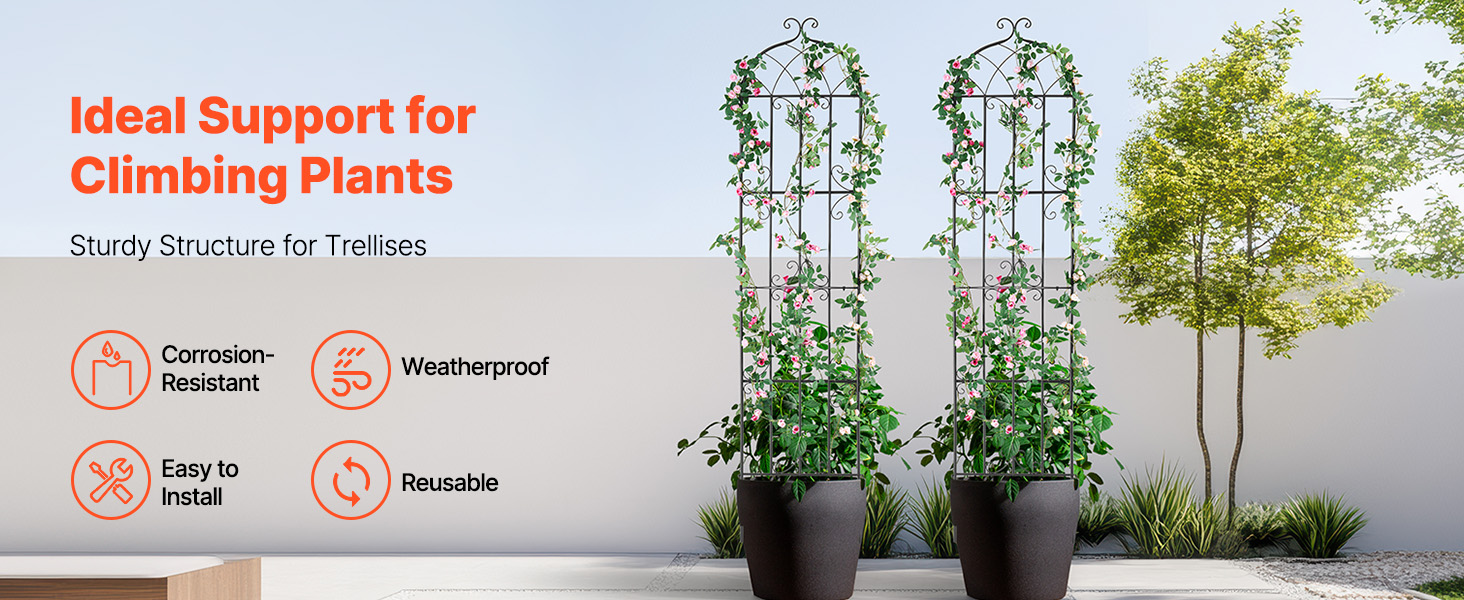
Garden design is about blending functionality with beauty. Wrought iron trellises come in elegant forms—arched, obelisk, or decorative wall panels—that serve as art in themselves. Their dark, sleek lines contrast beautifully with colorful blooms and lush greenery, creating a striking garden centerpiece.
Low Maintenance
A wrought iron trellis requires far less upkeep compared to wood. Occasional checks for rust and a fresh coat of protective paint when needed are usually enough to keep it in perfect condition for decades.
Comparing Wrought Iron with Other Materials
| Material | Benefits | Drawbacks |
|---|---|---|
| Wrought Iron | Strong, long-lasting, supports heavy plants, elegant designs | Heavier, more expensive upfront |
| Wood | Natural look, affordable, lightweight | Prone to rot, termites, and weather damage |
| Plastic or Vinyl | Lightweight, inexpensive, weather-resistant | Not as sturdy, unsuitable for heavy climbers |
| Bamboo | Eco-friendly, flexible, affordable | Short lifespan, not ideal for large plants |
When considering both longevity and strength, wrought iron outperforms other materials, especially for gardeners who want to invest in a structure that will last.
Choosing the Right Trellis
Match Trellis to Plant Type
- Light Climbers: Sweet peas, clematis, and morning glories do well on smaller trellises.
- Heavy Climbers: Roses, wisteria, and grapevines require strong, tall, and firmly anchored wrought iron trellises.
Style Options
- Wall-Mounted Trellises: Great for saving space and adding greenery to walls or fences.
- Freestanding Panels: Useful for creating privacy screens or dividing garden areas.
- Obelisks and Arches: Perfect for focal points and pathways, adding vertical drama to a garden.
Size Considerations
Choose a trellis that accommodates the mature size of your plant. For example, wisteria can spread widely and grow very heavy, demanding a large, sturdy structure. Smaller plants only require modest trellises.
Finish and Coating
Opt for powder-coated or weather-resistant finishes. This prevents rust and adds to the lifespan of the structure. Black or dark finishes are most common as they complement most plant colors and garden styles.
Best Climbing Plants for Wrought Iron Trellises
Flowering Climbers
- Climbing Roses: Provide romantic blooms and fragrance. Their thorny stems benefit from the sturdy support of iron.
- Wisteria: Heavy, cascading flowers need the strength of wrought iron to hold them up.
- Clematis: Offers abundant, colorful flowers and intertwines easily with trellis designs.
Edible Climbers
- Grapevines: A classic choice, offering lush leaves and delicious fruit.
- Cucumbers and Beans: Perfect for vertical gardening in small spaces.
Decorative Greenery
- Ivy: Provides dense, year-round greenery.
- Honeysuckle: Fragrant and attractive to pollinators.
By pairing the right plant with the right trellis, you ensure healthy growth and a stunning display.
Installation Tips
Secure Placement
Wrought iron is heavy, so secure anchoring is essential. If the trellis is freestanding, insert its legs firmly into the soil or use cement for added stability. Wall-mounted trellises should be spaced slightly away from the wall to allow airflow and prevent moisture damage.
Position for Growth
Place the trellis in a spot with adequate sunlight and soil conditions suited to your chosen plant. Ensure the base is positioned where roots can easily establish.
Training the Plants
Gently tie young vines with garden twine or soft ties, avoiding anything that could cut into stems. As plants grow, guide them along the trellis, weaving shoots through the structure.
Maintenance and Care
- Rust Prevention: Check for signs of rust annually. Sand lightly and repaint if needed.
- Cleaning: Rinse with water to remove dirt and debris.
- Pruning Plants: Regularly trim climbers to prevent them from overwhelming the structure and to encourage healthy growth.
- Seasonal Checks: After winter, inspect for damage from frost or heavy snow and make necessary repairs.
Design Ideas for Wrought Iron Trellises
Garden Focal Point
Install an ornate trellis as the centerpiece of a flower bed, allowing vibrant climbers to frame it beautifully.
Pathway Arch
Use an arched wrought iron trellis over a walkway or garden entrance. Climbing roses or wisteria can create a magical tunnel of blooms.
Privacy Screen
Combine several trellises in a row and grow thick climbers to form a natural living wall.
Vertical Kitchen Garden
Train beans, cucumbers, or tomatoes on a wrought iron trellis to maximize harvests in compact gardens.
Decorative Enhancements
Adorn your trellis with fairy lights, lanterns, or seasonal decorations to enjoy it year-round.
Read More: MyFastBroker.com Review: Fast and Secure Broker Matching
Conclusion
A wrought iron trellis is both a functional garden tool and a timeless design element. Unlike wood or plastic, it provides unmatched durability, supporting even the heaviest climbers like wisteria and roses. With minimal maintenance, it can serve your garden for decades, making it a worthwhile investment. Beyond its practicality, wrought iron adds an elegant, architectural touch that elevates any outdoor space.
By choosing the right size and style, installing it securely, and pairing it with suitable plants, you can create a garden feature that is as resilient as it is beautiful. Whether your goal is to add height, provide privacy, or simply create a stunning focal point, a wrought iron trellis will help your climbing plants thrive while enhancing the overall charm of your garden.
FAQs
1. What plants grow best on a wrought iron trellis?
Climbing roses, wisteria, clematis, grapevines, honeysuckle, ivy, and morning glory are among the best choices.
2. How do I keep a wrought iron trellis from rusting?
Choose a powder-coated finish, and repaint or touch up any exposed areas regularly. Keeping it clean and dry also helps prevent rust.
3. Can I use a wrought iron trellis indoors?
Yes, smaller decorative trellises can be used indoors for houseplants like philodendrons or pothos, adding a stylish touch to interiors.
4. How do I train plants on a wrought iron trellis?
Start by tying young vines gently with soft ties, then guide them through the trellis structure. Regular pruning keeps growth under control.
5. Is wrought iron worth the higher cost compared to wood?
Absolutely. While more expensive upfront, wrought iron lasts decades, supports heavier plants, and requires far less maintenance, making it cost-effective over time.