Lightning does not negotiate. It strikes, calculates nothing, and yet its precision can ruin years of engineering effort in seconds. Selecting a lightning risk assessment tool, therefore, is not about convenience; it is about defence against unpredictability. Choosing the right software defines how accurately you anticipate that unpredictable energy and how intelligently your system mitigates it.
Recognising Lightning Risk Assessment’s Components
The likelihood of a strike, its possible effects, and the effectiveness of preventative measures are all examined in lightning risk assessment. Standards like IEC 62305 and NFPA 780 govern it, making it the foundation of any protective design. Ground resistance, material exposure, structural conductivity, and environmental conditions are all evaluated during the procedure.
The Markers of Strong Lightning Risk Software
Not every tool interpreting electrical risk qualifies as reliable. A strong platform should integrate three core functions:
- Accurate Data Input Handling: Minor errors in coordinates or material resistance values can shift the outcome dramatically.
- AI or Algorithmic Precision: Traditional spreadsheets cannot handle the variability of natural charge distribution; adaptive modelling can.
- Standard Alignment: Compliance with IEC and NFPA ensures results remain globally recognised and defensible.
These factors draw the line between predictive modelling and guesswork.
Skytree Scientific’s LRA Plus™: A Modern Analytical Partner
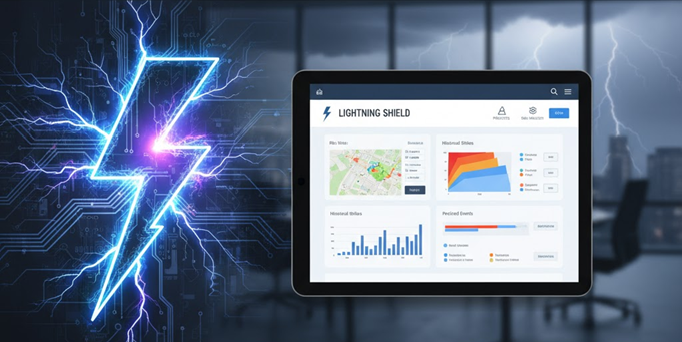
Skytree Scientific has redefined computational accuracy within lightning risk assessment through its product LRA Plus™. The platform applies advanced AI-driven analysis to assess thousands of parameters simultaneously, producing quantitative insight where manual calculations collapse under volume.
LRA Plus™ operates with adaptive models that read regional climate data, material conductivity, and exposure intensity in near real time. Its reports are structured for both technical experts and compliance officers, removing ambiguity from interpretation. Instead of offering a mere checklist, the system interprets the entire electrical environment of a project and ranks vulnerabilities by magnitude.
How to Judge Compatibility with Your Project
Every structure introduces unique risk variables. An oil refinery, for instance, demands a higher focus on indirect surge pathways, while data centres require analysis around transient voltages. When selecting software, consider:
- Scalability: Does it handle both small facilities and industrial-scale complexes without computation lag?
- Integration: Can it work with CAD or BIM environments for design validation?
- Customisation: Does it allow configuration for site-specific topography and weather datasets?
Projects differ, but the mathematical discipline behind assessment must remain constant.
Evaluating Reporting and Compliance Output
Readable, defensible documentation transforms an analysis into an engineering asset. A suitable lightning risk assessment software must produce reports formatted for authority submission, internal review, and long-term maintenance planning. LRA Plus™ distinguishes itself by generating layered reports that separate raw data, interpreted results, and compliance summaries. Engineers can move from overview to technical core without redundant pages or manual recalculation.
Final Perspective
Choosing the best lightning risk assessment software is less about brand preference and more about precision, transparency, and adaptability. Skytree Scientific’s LRA Plus™ presents a data-driven framework where artificial intelligence aligns with regulatory logic, producing decisions grounded in science rather than assumption. For projects where electrical exposure defines operational safety, such analytical strength is not luxury but necessity.