If you’re an orthodontist looking to grow your practice, search engine optimization (SEO) should be at the top of your marketing priority list. When potential patients search for “orthodontist near me” or “Invisalign provider,” you want your practice to appear at the top of search results—not buried on page three, where nobody will find you.
Justin Morgan, known in the industry as the Dental Marketing Guy, has spent years helping orthodontic practices dominate local search results. His proven strategies have helped countless practices increase their online visibility, attract more qualified leads, and ultimately fill their appointment books.
The good news? You don’t need to be a technical expert to implement effective SEO for orthodontists. By following these ten actionable tips, you can significantly improve your search rankings and connect with more patients in your area.
1. Claim and Optimize Your Google Business Profile
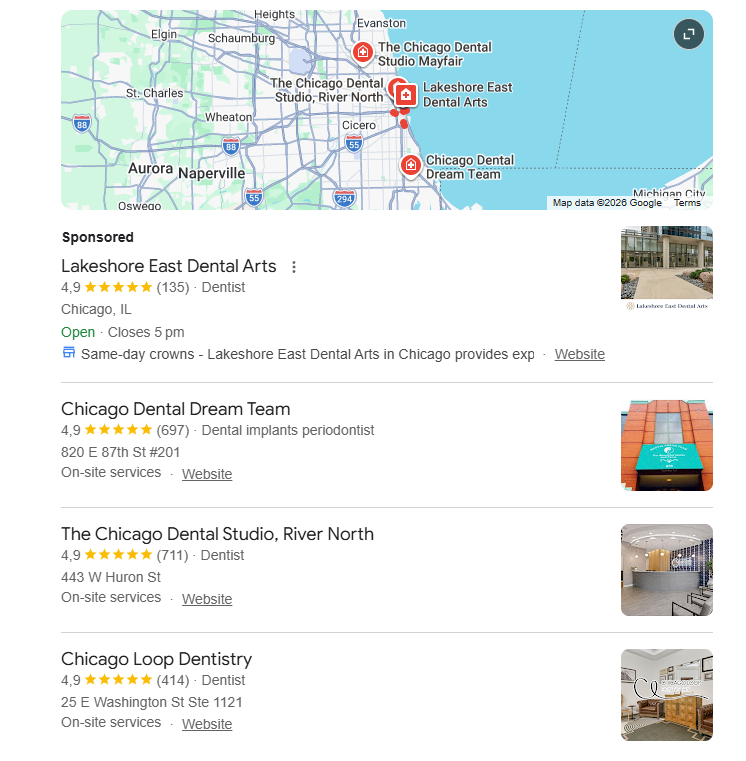
Your Google Business Profile (formerly Google My Business) is arguably the most important element of local SEO for orthodontists. This free tool allows you to manage how your practice appears in Google Search and Maps.
Start by claiming your profile if you haven’t already. Then, ensure every field is completely filled out with accurate information. This includes your practice name, address, phone number, website, hours of operation, and services offered.
Upload high-quality photos of your office, staff, and treatment results (with patient permission). Practices with photos receive 42% more requests for directions and 35% more click-throughs to their websites compared to those without images.
Select the most relevant categories for your practice. “Orthodontist” should be your primary category, but you can also add secondary categories like “Cosmetic Dentist” or “Dental Clinic” if they apply to your services.
Most importantly, encourage satisfied patients to leave Google reviews. Respond to all reviews—both positive and negative—in a professional and timely manner. Reviews not only influence potential patients but also signal to Google that your practice is active and trustworthy.
2. Target Location-Specific Keywords
Generic keywords like “orthodontist” are incredibly competitive and won’t help you attract local patients. Instead, focus on location-specific keywords that reflect how people actually search for orthodontic services in your area.
Create content around phrases like “orthodontist in [your city],” “braces in [your neighborhood],” or “Invisalign provider near [local landmark].” These geo-targeted keywords have less competition and higher conversion rates because they capture people actively looking for services in your area.
Use keyword research tools like Google Keyword Planner, Ahrefs, or SEMrush to identify which location-based terms have decent search volume in your market. Pay attention to “near me” searches, which have grown exponentially as mobile search becomes more dominant.
Incorporate these keywords naturally throughout your website—in page titles, headings, meta descriptions, and body content. However, avoid keyword stuffing, as it can harm your rankings. The content should always read naturally and provide genuine value to readers.
3. Create Service-Specific Landing Pages
Don’t try to cram all your services onto a single page. Instead, create dedicated landing pages for each major service you offer, such as traditional braces, Invisalign, lingual braces, early orthodontic treatment, and adult orthodontics.
Each page should thoroughly explain the treatment, including what it involves, who it’s best for, expected duration, and potential benefits. Include before-and-after photos (with patient consent), testimonials specific to that treatment, and clear calls-to-action for scheduling consultations.
These dedicated pages allow you to target specific search queries like “Invisalign provider in [city]” or “adult braces [location].” They also provide a better user experience by giving visitors exactly the information they’re looking for without making them hunt through your entire website.
Make sure each landing page includes location information and service-specific schema markup to help search engines understand your content and display it appropriately in search results.
4. Publish Educational Blog Content Consistently
A blog is one of the most powerful SEO tools at your disposal. Regular, high-quality content signals to search engines that your website is active and authoritative in your field.
Write blog posts that answer common patient questions: “How long do braces take to straighten teeth?” “What’s the difference between Invisalign and traditional braces?” “How do I care for my retainer?” These educational posts capture people in the research phase of their orthodontic journey.
Focus on providing genuine value rather than just promoting your services. The goal is to establish your practice as a trusted source of information. When readers find your content helpful, they’re more likely to choose your practice when they’re ready to begin treatment.
Aim to publish at least one high-quality blog post per month, though weekly posting is ideal if you have the resources. Each post should be at least 800-1,000 words and include relevant keywords, internal links to other pages on your site, and compelling images.
Don’t forget to optimize each blog post with a descriptive title tag, meta description, header tags (H1, H2, H3), and alt text for images. These elements help search engines understand your content and display it properly in search results.
5. Build Local Citations and Directory Listings
Local citations are online mentions of your practice’s name, address, and phone number (NAP) on other websites. These citations help establish your practice’s legitimacy and improve local search rankings.
Start by ensuring your NAP information is consistent across all platforms. Even small discrepancies—like using “Street” on one site and “St.” on another—can confuse search engines and hurt your rankings.
Submit your practice to major directories like Yelp, Healthgrades, Vitals, ZocDoc, and the Better Business Bureau. Don’t overlook industry-specific directories like the American Association of Orthodontists’ Find an Orthodontist tool.
Local citations also include mentions in local business directories, chamber of commerce listings, and community websites. The more quality citations you have, the more confident search engines become that your practice is legitimate and serves your local area.
6. Optimize Your Website for Mobile Devices
Over 60% of Google searches now happen on mobile devices, and this percentage is even higher for local searches. If your website doesn’t provide an excellent mobile experience, you’re losing potential patients.
Google uses mobile-first indexing, which means it primarily uses the mobile version of your site for ranking and indexing. A website that’s difficult to navigate on a smartphone will be penalized in search results.
Test your website’s mobile-friendliness using Google’s Mobile-Friendly Test tool. Your site should load quickly, display properly on small screens, have easily clickable buttons, and avoid using Flash or other outdated technologies.
Pay special attention to your contact information and appointment scheduling features on mobile. Make it incredibly easy for someone to call your office or request an appointment with just a tap or two. Consider implementing click-to-call buttons and mobile-optimized contact forms.
7. Improve Your Website’s Loading Speed
Page speed is a confirmed ranking factor for both desktop and mobile searches. More importantly, slow-loading websites frustrate visitors and cause them to leave before even seeing your content.
Studies show that 53% of mobile users abandon sites that take longer than three seconds to load. Every additional second of load time can reduce conversions by up to 20%.
Use Google’s PageSpeed Insights tool to analyze your website’s performance and receive specific recommendations for improvement. Common issues include oversized images, too many plugins, unoptimized code, and poor hosting.
Compress and properly size all images before uploading them to your website. Consider using a content delivery network (CDN) to serve your content faster to visitors, regardless of their location. Enable browser caching so returning visitors don’t have to reload all your site elements each time they visit.
If your website is built on WordPress, remove unnecessary plugins and consider upgrading to faster hosting if your current provider isn’t meeting performance standards.
8. Earn Quality Backlinks From Relevant Sources
Backlinks—links from other websites to yours—remain one of the most important ranking factors in Google’s algorithm. However, not all backlinks are created equal. A single link from a reputable healthcare website is worth far more than dozens of links from low-quality directories.
Focus on earning links from local news sites, healthcare organizations, dental associations, educational institutions, and other authoritative sources relevant to orthodontics or your local community.
Consider creating linkable assets, such as original research, comprehensive guides, or helpful resources, that other websites will naturally want to reference. Sponsor local events, participate in community activities, or offer to write guest posts for local publications.
Avoid buying links or participating in link schemes, which can result in penalties that devastate your search rankings. Quality always trumps quantity when it comes to backlinks.
Build relationships with other healthcare providers in your area who serve complementary but non-competing markets. General dentists, pediatric dentists, and oral surgeons often refer patients to orthodontists and may be willing to link to your website as a resource for their patients.
9. Implement Schema Markup for Local Business
Schema markup is code you add to your website that helps search engines understand your content better and display it more prominently in search results.
The local business schema provides search engines with specific information about your practice, including your address, phone number, hours, services, and more. This information can then appear in rich snippets, knowledge panels, and other enhanced search features.
Medical business schema provides additional structured data specific to healthcare providers, including accepted insurance plans, medical specialties, and other relevant information.
While implementing schema markup requires some technical knowledge, many website platforms and plugins can help you add it without coding experience. If you’re not comfortable doing it yourself, hiring an SEO professional or web developer can provide significant value.
Use Google’s Rich Results Test tool to verify that your schema markup is correctly implemented and eligible for rich results in search.
10. Monitor Your SEO Performance and Adjust
SEO isn’t a one-time project—it’s an ongoing process that requires regular monitoring and adjustment. Set up Google Analytics and Google Search Console to track your website’s performance and identify opportunities for improvement.
Pay attention to metrics like organic traffic, bounce rate, time on site, and conversion rates. Monitor which keywords drive traffic to your site and which pages perform best.
Google Search Console shows you which search queries are triggering your website in results, your average position for those queries, and your click-through rate. This data helps you identify keywords where you’re ranking on page two or three and just need a little boost to reach page one.
Track your local rankings for key terms in your area. Tools like BrightLocal, Whitespark, or Local Falcon can help you monitor where your practice appears in local search results across different locations and keywords.
Set up monthly or quarterly reviews of your SEO performance. Look for trends, identify what’s working, and adjust your strategy accordingly. SEO is constantly evolving, so staying informed about algorithm updates and best practices is essential for long-term success.
Take Control of Your Practice’s Online Visibility
Implementing these ten SEO strategies will significantly improve your orthodontic practice’s online visibility and help you connect with more patients in your local area. While some aspects of SEO require technical knowledge, many of these tactics can be implemented with basic website management skills and consistent effort.
Remember that SEO is a long-term investment. You likely won’t see dramatic results overnight, but with consistent implementation of these strategies, you should notice improved rankings and increased website traffic within three to six months.
If you’re feeling overwhelmed or simply don’t have time to manage SEO alongside running your practice, consider working with a dental marketing specialist who understands the unique challenges and opportunities in orthodontic marketing. The right partner can accelerate your results and ensure you’re maximizing your return on investment.
Start with the basics—claim your Google Business Profile, optimize for local keywords, and create helpful content—then build from there. Your future patients are searching for orthodontic services right now. Make sure they find you first.