
Introduction
Thailand has embraced mobile payments and QR technology, making self-ordering systems (ระบบสั่งออเดอร์สินค้าด้วยตนเอง) a new standard across cafés, restaurants, and food courts. Instead of waiting for staff or using paper menus, customers simply scan a QR code, browse a digital menu, place their orders, and pay instantly through PromptPay, Thai QR, cards, or e-wallets. For restaurants, the system integrates with the POS, routes items directly to the kitchen, and reduces errors while boosting upsells and table turnover. This guide explains how self-ordering works in Thailand, why adoption is rising, and how businesses can roll out a secure, compliant, and user-friendly system.
Whether you’re a small café in Chiang Mai or a busy Bangkok restaurant, understanding the technology, cost, and customer experience factors will help you stay competitive and meet the expectations of both locals and international tourists.
What is a Self-Ordering System in Thailand?
A self-ordering system allows customers to order and pay without staff intervention. The most common model in Thailand is QR code ordering at the table. Guests scan a QR code, view a bilingual or multilingual digital menu, customize items, and pay directly from their phone. Orders automatically reach the kitchen display system (KDS) or printer, ensuring accuracy and speed.
Key components include:
- QR codes (static or dynamic) placed on tables.
- Digital menus with images, categories, and modifiers.
- POS integration to manage items, stock, and receipts.
- Payment gateways connected to Thai QR, PromptPay, and cards.
Why Self-Ordering is Growing in Thailand
- QR Adoption – QR code usage is widespread, driven by the national Thai QR Payment standard.
- PromptPay Popularity – Over 80 million PromptPay accounts make QR-based payments universal.
- Tourism Boom – With over 30 million annual visitors, restaurants need fast, multilingual ordering.
- Cross-Border QR – Tourists from Singapore, Malaysia, and other ASEAN countries can pay with their home apps.
- Labor Efficiency – Staff can focus on food delivery and hospitality instead of order-taking.
Benefits for Restaurants and Customers
For restaurants:
- Faster order processing and reduced staff workload.
- Increased upselling through digital menu suggestions.
- Reduced human error and voided transactions.
- Real-time analytics for menu optimization.
For customers:
- Convenience of ordering anytime during the meal.
- Easy bill-splitting at the table.
- Multilingual menus for tourists.
- Transparent payment options with receipts.
Payment Reality in Thailand (2025)
- Thai QR / PromptPay: The default payment option for most locals.
- Cards and e-wallets: Still important, especially for tourists.
- Cross-border QR: Tourists can pay via linked systems like PayNow and Alipay+.
- Tourist solutions: Some services provide e-wallets designed for foreigners to pay seamlessly.
User Experience Tips for Thailand
- Language support: Always provide Thai and English, with Chinese where possible.
- Visual menus: High-quality images improve conversion and reduce confusion.
- Modifiers: Include options like “no chili,” “extra egg,” or “less sugar.”
- Accessibility: Large buttons, clear icons, and offline-friendly menus.
- Tourist guidance: Short on-screen instructions for how to use Thai QR.
Implementation Checklist (30 Days)
Week 1 – Setup
- Choose a POS with native QR ordering support.
- Enable PromptPay, card, and wallet payments.
- Prepare PDPA-compliant privacy notice.
Week 2 – Menu Design
- Optimize menus for mobile with categories and bestseller highlights.
- Add combo meals and upsell prompts.
- Configure modifiers and allergen tags.
Week 3 – Pilot Test
- Print QR codes and place them on tables.
- Train staff to act as digital hosts.
- Track time-to-order and customer satisfaction.
Week 4 – Optimization
- Rotate menu photos and special offers.
- Enable upsell prompts for drinks and desserts.
- Use customer feedback to refine flow.
Costs and ROI
- Software: ฿1,500–฿6,000 per month per outlet for POS packages with mobile ordering.
- Payments: Thai QR fees are lower than card merchant fees.
- Hardware: Minimal—mainly printers or tablets for the kitchen.
- ROI factors: Faster table turnover, higher average checks, and reduced staffing pressure.
Compliance and Security (PDPA)
Businesses must comply with Thailand’s Personal Data Protection Act (PDPA):
- Display a clear privacy policy on the ordering app.
- Collect only necessary data (table number, order items).
- Obtain consent for marketing or analytics.
- Protect and limit data storage.
- Provide receipts compliant with tax regulations.
Vendor Selection Tips
- Look for POS systems with integrated QR ordering (e.g., FoodStory, Wongnai).
- Ensure support for Thai QR, cards, and e-wallets.
- Check for bilingual interfaces and tourist-friendly UX.
- Choose a vendor with strong local support and upgrade options.
QR vs. Kiosk in Thailand
- QR Systems: Best for most restaurants—low cost, easy rollout, and familiar to locals.
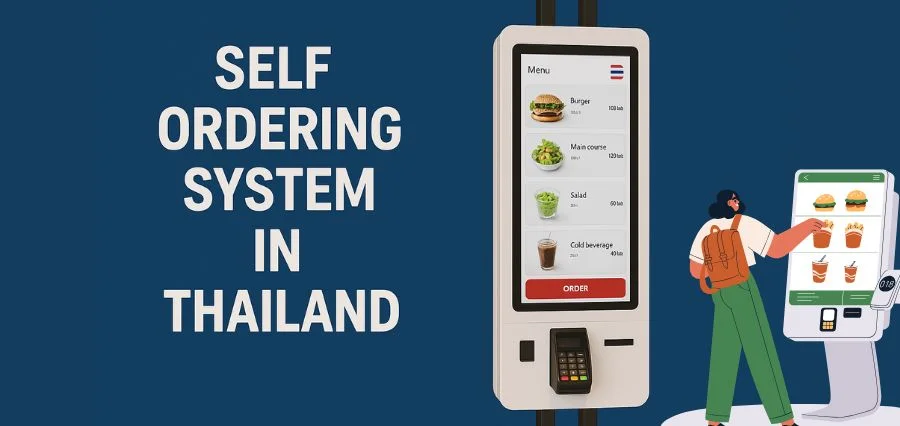
- Kiosks: Useful in fast-food chains or food courts where customers order before seating.
Common Pitfalls to Avoid
- Overloading menus with too many categories.
- Using small fonts or unclear images.
- Neglecting staff training—human support is still vital.
- Ignoring tourist payment needs.
- Forgetting PDPA compliance requirements.
FAQs
1. How does a self-ordering system work in Thailand?
Customers scan a QR code at their table, browse a menu on their phone, place an order, and pay directly. Orders go to the kitchen instantly.
2. Can tourists use QR ordering if they don’t have a Thai bank account?
Yes. Many tourists use cross-border QR payments or international e-wallets. Card payments are usually available as backup.
3. Is QR ordering cheaper than kiosks?
Yes. QR requires minimal hardware, while kiosks need costly machines and maintenance.
4. Is QR ordering legal and PDPA-compliant in Thailand?
Yes, if restaurants follow PDPA rules by showing a privacy policy, securing data, and obtaining consent where needed.
5. Which POS systems in Thailand support self-ordering?
Popular Thai POS providers like FoodStory and Wongnai include self-ordering features with QR integration.
Read More: Okhatrimaza.com – Safe or Risky? Full Guide 2025
Conclusion
Self-ordering systems in Thailand have become essential for restaurants that want to stay competitive in 2025. With PromptPay and Thai QR adoption at record levels, customers now expect the convenience of scanning a QR, ordering quickly, and paying cashless. For businesses, the advantages include reduced labor costs, fewer mistakes, faster service, and higher customer satisfaction.
Tourists also benefit from cross-border QR support and multilingual menus, making dining out in Thailand smoother than ever. The key to success lies in choosing the right POS provider, designing a simple bilingual menu, and ensuring compliance with PDPA rules. Restaurants that implement these systems effectively not only improve operational efficiency but also build trust and loyalty among both locals and visitors. In Thailand’s fast-moving food and beverage industry, self-ordering is no longer optional—it’s the future of dining.