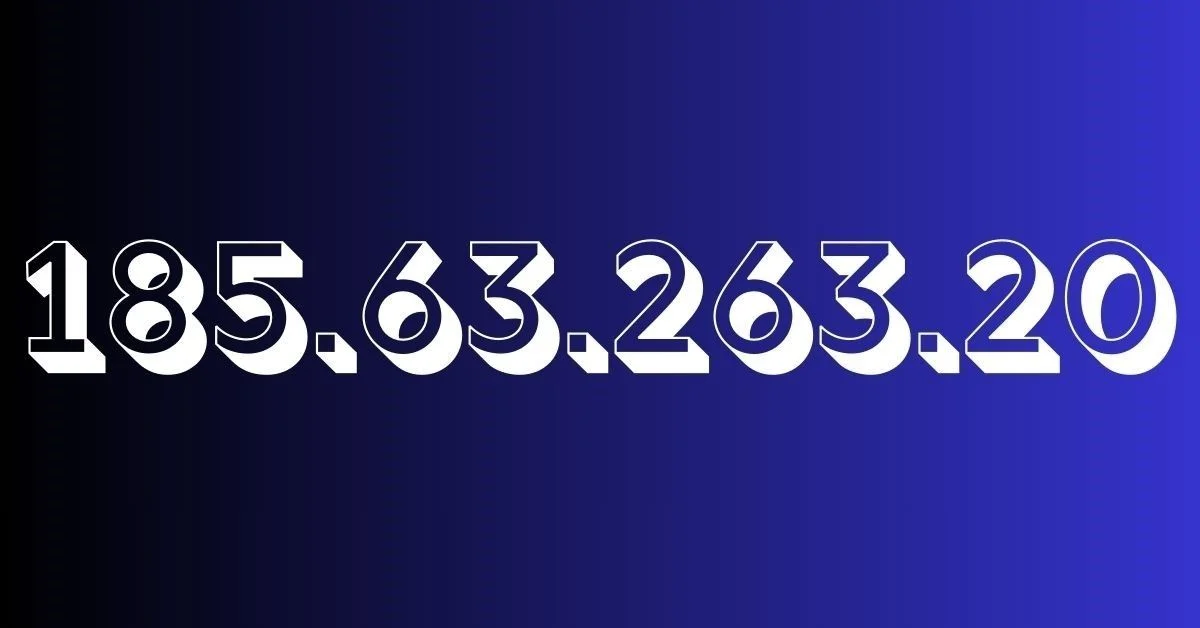
When people search for 185.63.263.20, they often assume it belongs to a server, hacker, or suspicious website. At first glance, it looks like a normal internet address. However, once you dig deeper into how IP addresses work, the mystery becomes clearer—and surprisingly interesting.
This guide explains what this address actually is, why it appears in search results and server logs, and whether it poses any real security risk.
Understanding the Structure of an IP Address
An IP address is essentially the digital identity of a device connected to the internet. Most commonly, websites and servers use IPv4 addresses, which consist of four numerical sections separated by dots.
Each section—known as an octet—must fall between 0 and 255. That rule exists because each octet is based on an 8-bit binary value, allowing 256 possible numbers.
For example:
- 192.168.1.1 – valid
- 8.8.8.8 – valid
- 185.63.263.20 – questionable
At first glance, the address looks perfectly normal. But one small detail breaks the entire structure.
Why 185.63.263.20 Is Not a Valid IP Address
The problem lies in the third segment of the address.
Here is a simple breakdown:
| Octet Position | Value | Valid Range | Status |
|---|---|---|---|
| First | 185 | 0–255 | Valid |
| Second | 63 | 0–255 | Valid |
| Third | 263 | 0–255 | Invalid |
| Fourth | 20 | 0–255 | Valid |
Because 263 is higher than the maximum allowed value of 255, the address cannot exist in the IPv4 system.
In simple terms, it’s like writing an address for a building floor that doesn’t exist. Computers simply reject it.
That means:
- No device can own it
- No server can host it
- No internet traffic can be routed to it
Why This Address Appears Online
Despite being technically impossible, the string still shows up across the web—from analytics tools to cybersecurity discussions.
There are several reasons this happens.
1. Typographical Mistakes
Sometimes developers or administrators accidentally enter the wrong number while configuring systems. A small typo can easily turn a legitimate IP into something invalid.
For instance:
- Intended: 185.63.236.20
- Mistyped: 185.63.263.20
Even a single misplaced digit can create confusion.
2. Misconfigured Scripts or Software
Automated tools sometimes generate log entries incorrectly. If the script validating IP formats is flawed, it may record malformed addresses.
This can happen in:
- server logs
- analytics dashboards
- bot-traffic monitoring systems
When that occurs, strange addresses like this can appear repeatedly.
3. Spoofed or Fake Traffic
Cybersecurity experts have observed that some bots intentionally send malformed IP strings during scanning attempts.
The reason is simple: it can help confuse logging systems or bypass poorly designed filters.
Although the address itself cannot send traffic, it may appear as spoofed metadata in certain systems.
4. Placeholder Data in Tutorials or Tests
Developers sometimes use fake addresses as examples in documentation or training materials.
Instead of referencing a real device, they insert something obviously invalid so no one accidentally connects to a real server.
This practice can unintentionally make such numbers trend in search engines.
Case Study: Identifying an Invalid IP in Website Logs
Imagine a website owner reviewing their firewall logs late at night.
Suddenly, they notice several failed connection attempts coming from an address that looks unfamiliar: 185.63.263.20.
At first, panic sets in. It looks like someone is trying to access the site from a suspicious location.
After a closer look, however, the admin realizes the address isn’t valid at all. The log entry likely came from a malformed request generated by a scanning bot or a logging error.
The takeaway is simple: not every strange IP in your logs represents a real attacker.
Valid vs Invalid IP Address Comparison
Understanding the difference helps eliminate unnecessary worry.
| Example Address | Valid? | Reason |
|---|---|---|
| 185.63.153.20 | Yes | All octets within 0–255 |
| 192.168.0.1 | Yes | Common private network address |
| 8.8.8.8 | Yes | Public DNS server |
| 185.63.263.20 | No | Third octet exceeds 255 |
The rule is strict: if any number exceeds 255, the address cannot function on the internet.
Is It a Cybersecurity Threat?
The short answer: not directly.
Since the address cannot exist on a real network, it cannot host malware or run servers.
However, its presence in logs might indicate:
- malformed requests
- scanning bots
- poorly configured software
- automated testing tools
Cybersecurity professionals recommend checking logs carefully whenever unusual addresses appear, just to confirm nothing else is wrong with the system.
A Personal Observation From Experience
While reviewing a website’s analytics dashboard during a troubleshooting session, I once noticed a similar invalid IP entry in the traffic logs, which initially looked suspicious but turned out to be nothing more than a malformed request generated by a bot scanner.
Moments like that remind us how easy it is to misinterpret raw data without understanding the technical rules behind it.
Why Searches for This Address Are Increasing
Search engines sometimes surface strange numeric strings because people repeatedly look them up.
In this case, curiosity drives the trend. When users encounter unfamiliar numbers in logs or security alerts, they search for explanations.
As more people search, the phrase gains traction in SEO tools, creating a feedback loop of curiosity and research.
What You Should Do If You See It
If you encounter this address in logs or analytics reports, consider these steps:
- Double-check the source – ensure it’s not a typo in configuration files.
- Review your firewall logs for patterns of repeated requests.
- Update security filters to ignore malformed addresses.
- Monitor traffic patterns for genuine threats.
In most cases, the appearance of such an address is harmless.
Also Read: DeepSeekPlay com Guide: Features, Use & Platform Info
Conclusion
Although 185.63.263.20 looks like a standard internet address, it cannot exist within the IPv4 system because one of its numeric segments exceeds the allowed range. This simple formatting error makes it impossible for any device or server to use it.
Its frequent appearance in logs, SEO searches, and cybersecurity discussions usually stems from typos, automated scripts, spoofed data, or placeholder examples rather than real network activity.
Understanding how IP addresses work can help prevent unnecessary alarm. When you know the rules behind internet addressing, strange numbers like this quickly become less mysterious—and far less threatening.
FAQs
Is 185.63.263.20 a real IP address?
No. The third segment contains the number 263, which exceeds the allowed IPv4 range of 0–255, making it technically invalid.
Can someone hack my website using this address?
No. Since the address cannot exist on a network, it cannot send traffic or host malicious activity.
Why does it appear in server logs?
It may appear due to typos, misconfigured scripts, automated scanning bots, or logging errors.
Is it related to a specific country or hosting provider?
No legitimate ISP or hosting provider can own this address because it does not meet the IPv4 formatting requirements.
Should I block it in my firewall?
Blocking malformed addresses can help keep logs cleaner, but they usually pose no real threat.